


Ask Alec: Is Carpet & Upholstery Protector Really Worth It?
One of the reasons I created the Ask Alec series is to share what I’ve learned after more than 55 years in the carpet and upholstery cleaning industry.
These articles aren’t based on marketing—they’re based on decades of cleaning thousands of carpets, rugs, and upholstered furnishings, solving difficult problems, and seeing what works over the long term.
I can only tell you how I honestly feel about a subject and explain why my years of experience have led me to these conclusions. My goal isn’t to sell you a service. It’s to give you the same honest advice I’d give a family member or a longtime customer.
When people ask me whether carpet or upholstery protector is worth the investment, my answer often surprises them because it’s different for carpets than it is for upholstered furniture.
Many companies automatically recommend protector on everything they clean.
I don’t.
Here’s why.
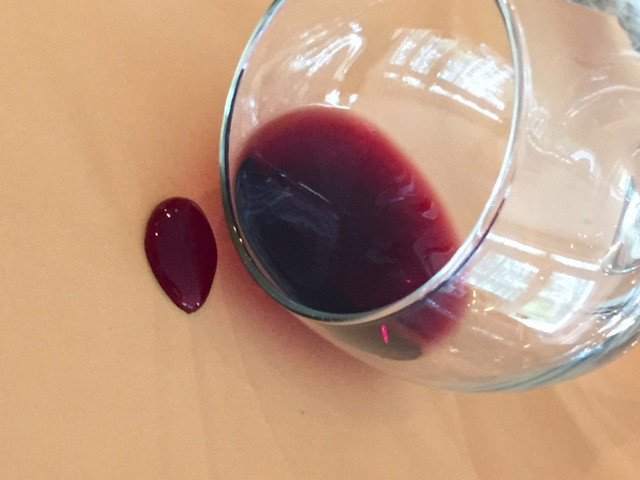
When it comes to cleaning carpets, our industry has an incredible number of products and procedures available. Depending on the type of carpet fiber and the type of stain, we can safely use alkaline detergents, acid rinses, citrus solvents, specialty gels, reducing agents for synthetic dyes, Red Relief treatments for organic red food stains, hydrogen peroxide, and even ultraviolet (UV) light to accelerate certain stain-removal procedures.
With all of these tools available, professional carpet cleaning has become remarkably effective.
Carpet protector certainly has its advantages. It creates a protective finish around the fibers that helps block dye sites, making it more difficult for many stains to permanently bond with the carpet.
The problem is that carpet protector doesn’t last forever.
Every time you walk across a carpet, microscopic amounts of that protective finish wear away. Hallways, family rooms, stairs, and other high-traffic areas lose their protection much faster than a spare bedroom that sees very little use. Eventually, the level of protection becomes so low that it provides very little benefit.
Because of that, I personally see carpet protector as offering only a modest advantage for most residential carpets. It can certainly be worthwhile on an expensive wool carpet, a fine area rug, or in situations where extra protection is important, but I don’t believe every carpet automatically needs it.
My opinion is quite different when it comes to upholstered furniture.
Unlike carpeting, upholstery fabrics are much more delicate. We have far fewer cleaning products and procedures that can be used safely without risking damage to the fabric or its dyes. Once a spill penetrates deep into the fibers, removing it without affecting the original color can become extremely difficult.
That’s why I strongly recommend applying a quality fabric protector to upholstered furniture.
A properly applied fabric protector helps repel both water-based and oil-based spills, giving you valuable time to blot them up before they penetrate the fibers. If the spill never reaches the fiber itself, there is a much greater chance that the original color of the fabric will remain unchanged.
Here’s an easy way to understand why.
Imagine a glass filled with blue water.
Now add a few drops of yellow dye.
The water turns green.
Can you remove the yellow dye and make the water blue again?
Of course not.
The color has been permanently altered.
The same thing can happen when certain spills penetrate upholstery fibers. Once dyes have been chemically altered or new dyes have bonded to the fabric, returning the material to its original color can be extremely difficult—and sometimes impossible.
Preventing that from happening is far easier than trying to correct it afterward.
Our industry continues to evolve, and fabric protectors today are different from many that were used years ago. If you choose to have protector applied, I recommend selecting a high-quality treatment that is both effective and free of PFAS “forever chemicals.”
Alec’s Bottom Line
For carpets, I believe protector has its place, particularly on valuable wool carpets, fine area rugs, and in certain situations, but I don’t believe every carpet needs it.
For upholstered furniture, however, I strongly recommend a quality fabric protector. Because our cleaning options are much more limited once spills penetrate upholstery fibers, preventing stains is almost always better than trying to remove them later.
If you have a question about carpet cleaning, upholstery cleaning, stain removal, or area rug care, I’d be happy to answer it in a future Ask Alec article.
Learn More About Our Cleaning Services
If you’d like to learn more about our professional cleaning services, visit our pages on Carpet Cleaning, Upholstery Cleaning, and Area Rug Cleaning. You’ll also find additional articles and advice in the Ask Alec section, where I answer common questions based on more than 55 years of experience.
If you’d like to learn more about the products and treatments we use, visit our Fabric Protection page.
Alec Houle
Alec’s Carpet & Upholstery Cleaning LLC