


What Is My Upholstery Trying to Tell Me?
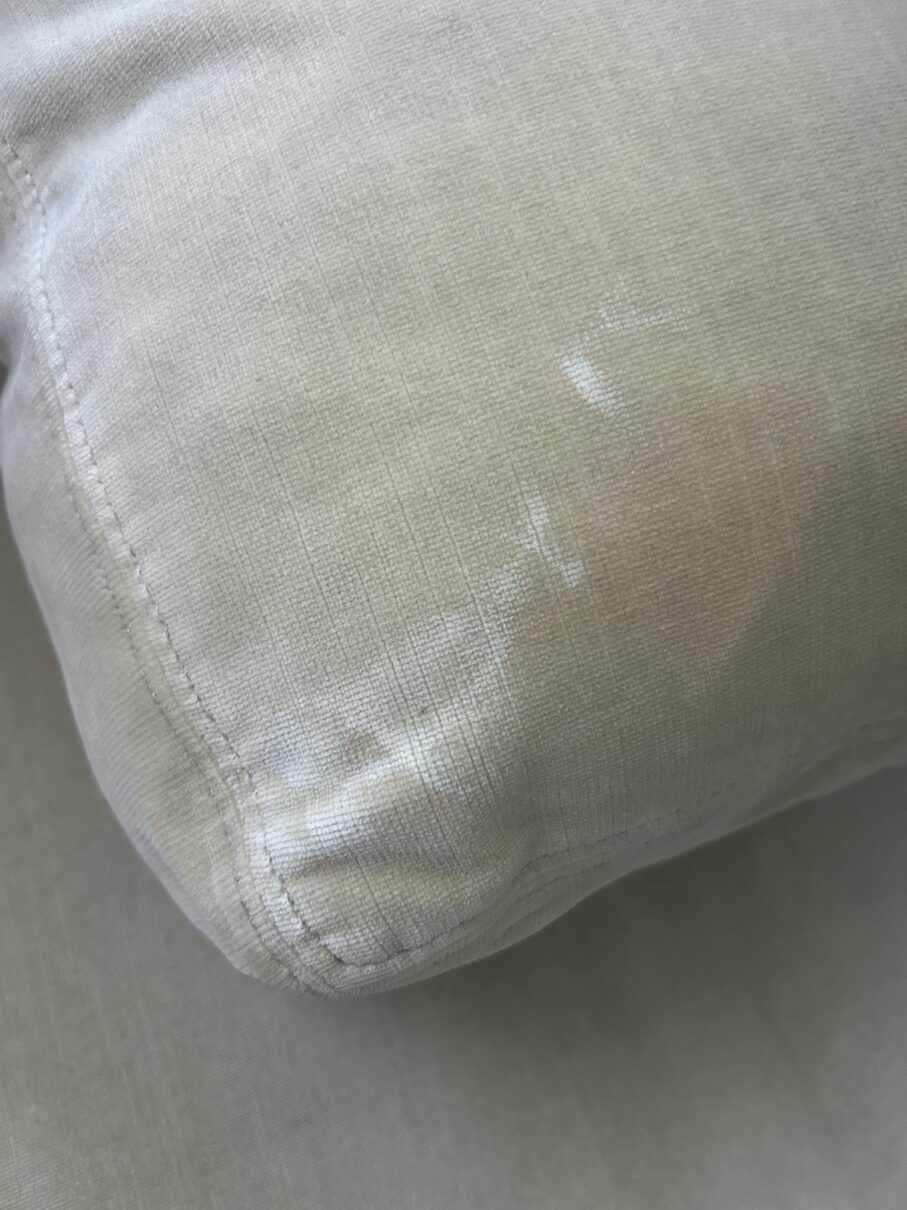
Have you ever noticed unusual upholstery problems on your furniture and wondered what caused them? Was it a stain, a defect, or was your upholstery trying to tell you something?
After more than 55 years of professionally cleaning upholstery, I’ve learned that what you see on the surface isn’t always where the problem begins.
Sometimes your upholstery is trying to tell you something.
Throughout my career, I’ve discovered that successful upholstery cleaning isn’t just about removing spots or making furniture look better. It’s about carefully observing what you’re seeing, asking questions, and understanding **why** something happened before deciding how to correct it.
Some of the most valuable lessons I’ve learned came from investigating problems that, at first glance, seemed impossible to explain—but eventually told their own story.
The Spot That Wasn’t There
One of my favorite stories still makes me smile.
Over the years, homeowners have occasionally called me because they discovered what appeared to be a spot on their sofa, favorite chair, or even an area rug.
When I arrive, I ask them to point to the exact spot.
Once they’ve shown me where it is, I simply step between the furniture and the nearby window.
Suddenly…
The spot disappears.
It wasn’t on the upholstery at all.
It was actually a spot on the window casting a shadow onto the fabric.
Needless to say, everyone usually has a good laugh—including me.
That simple experience taught me an important lesson early in my career.
Before trying to solve a problem, make sure you understand what the problem really is.
A White Haze on Brand-New Furniture
About 30 years ago, I received a call from Boston Harbor Hotel.
Their beautiful new upholstered furniture in the lobby had developed a mysterious white haze.
At first glance, many people assumed the furniture was defective.
After carefully investigating the situation, I discovered something entirely different.
At that time, much of the commercial upholstery used in hotels was treated with a salt-based flame-retardant finish to meet commercial fire-safety standards.
During the day, doors opening toward Boston Harbor allowed humid ocean air into the lobby. Later, when the doors were closed, the air conditioning reduced the humidity inside the building.
As moisture moved through the upholstery and evaporated, it carried dissolved salts from the flame-retardant treatment to the surface of the fabric, leaving behind a noticeable white haze.
The upholstery wasn’t becoming dirty.
It was simply revealing something that had been hidden inside the fabric all along.
The only permanent solution was to professionally wet clean the upholstery thoroughly enough to remove the salt residue from the fabric.
The Same Lesson at Another Hotel
Not long afterward, I was called to a newly opened hotel in Dedham, Massachusetts.
The hotel had just received beautiful new upholstered furniture.
The problem?
Every piece had hundreds of tiny white spots scattered across the fabric.
Again, many people assumed the furniture had a manufacturing defect.
But after asking a few questions, the answer became clear.
The delivery crew had removed the protective plastic wrapping while the furniture was still inside the truck. They then carried the furniture only a short distance into the hotel through the delivery entrance.
Unfortunately, it happened to be lightly raining.
The movers barely noticed the rain.
The upholstery, however, did.
Those tiny raindrops dissolved small amounts of the salt-based flame-retardant treatment within the fabric. As the furniture dried, the dissolved salts wicked to the surface, leaving behind hundreds of tiny white spots.
Once again, the upholstery wasn’t defective.
It was simply telling a story.
The solution, just as it had been at Boston Harbor Hotel, was to professionally wet clean the upholstery to remove the salt residue from the fabric.
What These Experiences Taught Me
Whether I’m working in a client’s home or serving a large commercial property like a major hotel, I’ve always believed it’s my responsibility to pursue any questions that arise, discover the cause of a problem, and do everything I can to resolve it in the client’s best interest.
If I notice something unusual, I don’t simply clean around it and move on.
I investigate it.
If I can determine why it happened, I can usually determine the safest and most effective way to correct it.
If I discover something that could affect my client’s furniture, I believe it’s my responsibility to bring it to their attention.
You’ve probably heard the phrase:
“If you see something, say something.”
I’ve always believed that applies to professional upholstery cleaning as well.
That’s one of the reasons people hire a professional.
They’re not simply hiring someone to clean fabric.
They’re hiring someone with years of experience who knows how to recognize unusual conditions, ask the right questions, and look out for their best interests.
What This Experience Taught Me
After more than 55 years in this business, I’ve learned that successful upholstery cleaning begins long before the first cleaning solution is ever applied.
It begins with careful observation.
Every unusual spot, stain, discoloration, or change in appearance has a story.
Sometimes the answer is obvious.
Sometimes it’s hidden beneath the surface.
If I’ve learned anything throughout my career, it’s this:
Never assume.
Observe carefully.
Ask questions.
Understand the cause of the problem.
Then determine the best solution.
That’s the philosophy I’ve tried to bring to every home and every business I’ve had the privilege of serving throughout Greater Boston.
Have a Question About Your Upholstery?
If you’ve noticed an unusual spot, stain, discoloration, or simply aren’t sure what’s happening with your upholstered furniture, I’d be happy to help.
With more than 55 years of professional upholstery cleaning experience, I can often identify problems before cleaning even begins.
Alec Houle
Alec’s Carpet & Upholstery Cleaning LLC
📞 781-871-1415
Learn more about our Professional Upholstery Cleaning Services:
https://alecscarpetcleaning.com/upholstery-cleaning/
—
Editor’s Note: The hotel examples described above occurred approximately 30 years ago. Upholstery manufacturing methods and flame-retardant technologies have evolved considerably since then, making these specific issues much less common today. These stories are shared because they illustrate an important principle that still applies today: careful observation and understanding the cause of a problem are essential before deciding on the best solution.