


Ask Alec: Why Won’t Some Carpet Stains Come Out After Cleaning?
Earlier today, one of my technicians called me from a customer’s home looking for advice.
The family dog had become sick and vomited in several places on different carpets and rugs. He thoroughly cleaned each affected area, but several of the stains remained.
His question was simple.
“Why won’t these stains come out?”
The answer has less to do with cleaning and much more to do with chemistry.
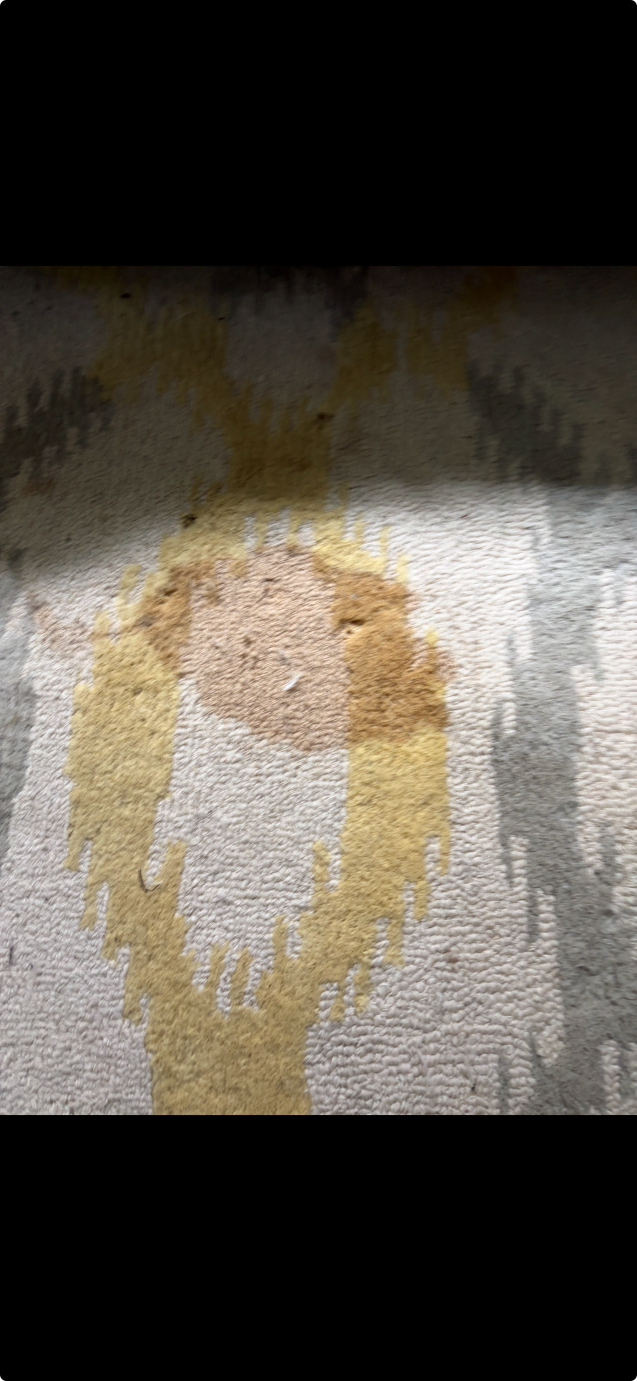
Cleaning Removes Soil – It Doesn’t Always Remove Color
One of the biggest misconceptions people have is believing that if a carpet has been cleaned properly, every stain should disappear.
Unfortunately, that’s not always the case.
Professional cleaning is designed to remove substances that are attached to the carpet fibers. Our cleaning solutions contain detergents, penetrating agents, emulsifiers and other ingredients that loosen soils and residues so they can be thoroughly rinsed away.
But some stains do something entirely different.
Instead of simply coating the fiber, they actually change the color of the fiber itself.
Once that happens, you’re no longer trying to remove dirt—you are trying to remove or alter color.
Those are two completely different processes.
Why Dog Vomit Can Create Such Difficult Stains
Let’s use the dog vomit I mentioned earlier as an example.
Many brands of dog food, whether dry or canned, contain added coloring to make the food look more appealing. If a dog becomes sick, its body produces increasing amounts of stomach acid until it finally vomits.
The result is partially digested food containing both food coloring and highly acidic stomach contents.
That combination can create a stain that ordinary cleaning cannot completely remove.
Many carpet fibers are originally colored during manufacturing using an acid dye process. While dog vomit isn’t actually re-dyeing the carpet, the acidic environment can help certain colorants bond much more tightly to some carpet fibers than ordinary soil would.
That’s why the stain may remain even after the carpet has been professionally cleaned.
My First Step Is Always Thorough Cleaning
Before attempting any specialty stain removal, I always want the affected area cleaned as thoroughly as possible.
Cleaning removes any remaining residue that could interfere with the stain removal process and allows me to see exactly what discoloration remains.
Only then do I decide what type of stain treatment is appropriate.
Not Every Stain Requires the Same Chemistry
One of the most important lessons I’ve learned after more than 55 years in this business is that there is no single stain remover that works on every stain.
The chemistry has to match the stain.
Some stains respond best to an oxidizing process.
Others respond better to a reducing process.
Choosing the correct chemistry is often far more important than choosing the strongest product.
When I Use an Oxidizing Treatment
For many organic stains, including dog vomit, coffee, tea and certain other discolorations, I often apply a professional oxidizing treatment after the carpet has been cleaned.
The product continues working as it dries, gradually lightening the remaining discoloration.
One thing I always explain to my customers is that they usually won’t see the stain getting lighter while the carpet is still wet.
The improvement occurs gradually during the drying process.
Sometimes one application is enough.
Sometimes several applications are needed.
Patience usually produces better results than trying to force the stain out all at once.
Why I Prefer a Slow Approach
Over the years I’ve learned that stain removal isn’t a race.
Some professionals use techniques that accelerate certain chemical reactions with additional heat or specialized equipment. Those methods have their place when used correctly.
Personally, I’ve always preferred making gradual improvements, evaluating the results after each treatment, and repeating the process only when necessary.
My goal has never been to remove a stain as quickly as possible.
My goal is to remove as much of the stain as possible without creating a new problem.
Once the original color of a carpet fiber has been damaged, there is no simple way to restore it.
That’s one reason I’ve always believed that patience is often one of the best stain-removal tools you can have.
Sometimes I Recommend a Simple Home Treatment
If additional professional visits aren’t practical, I often explain that many customers can continue the gradual lightening process themselves.
After the area has completely dried, I may recommend carefully applying small amounts of ordinary 3% hydrogen peroxide to the stained area only, allowing each application to dry completely before deciding whether another application is needed.
The important point is that the peroxide should be confined to the stained area and the results evaluated only after it has completely dried.
I’ve had many customers tell me they were pleasantly surprised by how much improvement they achieved simply by being patient and allowing each treatment to work before repeating the process.
Experience Makes a Difference
One example that stands out involved a wool carpet that had previously been over-wet during cleaning. Moisture caused discoloration from the jute backing to wick into the wool surface fibers. Additional cleaning didn’t solve the problem because the discoloration had already become part of the fiber.
Using the same gradual oxidizing approach over time significantly lightened the discoloration and restored the carpet’s appearance far beyond what cleaning alone could accomplish.
Experiences like that reinforce an important lesson.
Cleaning and stain removal are not the same thing.
Some Stains Need an Entirely Different Treatment
Not every stain responds to oxidation.
Many synthetic dye stains require an entirely different chemical approach using reducing agents.
Professional technicians determine which process is appropriate based on the type of stain, the carpet fiber, and how the stain chemically interacts with that fiber.
Using the wrong chemistry can produce disappointing results or even damage the carpet.
That’s why successful stain removal isn’t about using stronger chemicals—it’s about understanding the chemistry behind the stain.
Final Thoughts
People often ask me why one stain comes out easily while another seems impossible to remove.
The answer is that every stain tells a different story.
Some are simply dirt sitting on the surface.
Others have become chemically attached to the carpet fibers.
Understanding that difference is one of the reasons professional stain removal requires experience as well as the proper chemistry.
After more than 55 years of cleaning carpets, upholstery and fine rugs, I’ve learned that successful stain removal isn’t about working faster.
It’s about understanding what caused the stain, selecting the proper treatment, and having the patience to let chemistry do its job.
Have a carpet or upholstery question you’d like answered? Contact Alec’s Carpet & Upholstery Cleaning. I’d be happy to share what I’ve learned over the past 55 years helping homeowners protect their carpets, rugs and furniture. You can eithe email me at Alec@Alecscarpetcleaning.com, contact me or call my office at 781-871-1415